

Tooth loss is a frequent issue that affects numerous people across the country. Approximately 178 million Americans are missing at least one tooth thanks to decay, gum disease, and other reasons. The good news is that just because you’ve suffered from tooth loss in the past doesn’t mean that you need to go forward with gaps in your smile. Dr. Jon Kirlough offers dental bridges in Middleburg Heights to replace your missing teeth without breaking the bank. For more information or to schedule a consultation, contact our office!
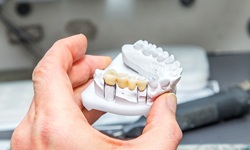
A dental bridge is a type of restoration that’s used to replace one or a few consecutive missing teeth. This could be anywhere from one to four teeth in a row. A bridge is composed of two crowns and a number of replacement teeth known as “pontics.” The crowns are anchored on the adjacent teeth or dental implants (depending on the type of bridge you opt for). Bridges can be made from many different materials, but porcelain is generally the best choice for a strong, natural-looking restoration.
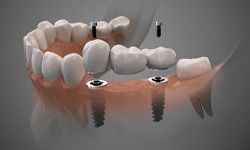
If Dr. Kirlough determines that you make a good candidate for a dental bridge, there are two different types that you could end up with:
If you still have healthy teeth on each side of the gap that needs to be filled in, a traditional bridge is an ideal option. The teeth that support crowns are known as abutment teeth, and they need to be altered slightly for the bridge to fit properly. This restoration can be placed in just a few visits and is generally more affordable than its implant counterpart.
Dental implant bridges can be used when three or more missing teeth are in a row. Instead of being placed over abutment teeth, the crowns are placed on the titanium implants that merge with the jaw and act as artificial tooth roots. Implant bridges tend to last longer than traditional ones on average, and they help to prevent bone loss from occurring as a result of tooth loss.

A traditional dental bridge is a relatively simple and cost-effective option for replacing missing teeth. In addition to providing strength and stability for chewing and speaking, they help to maintain the shape of your face. They also keep your surrounding teeth from shifting out of place and leading to misalignment issues later on.
Dental bridges are durable restorative appliances designed to remain fixed within the mouth for many years after being placed, so you should never be able to remove your bridge without the help of a qualified dentist such as Dr. Kirlough. While you may have heard of appliances called “removable bridges,” this is a misnomer that refers to partial dentures that are designed to be easily removed by the patient for hygiene purposes. Never attempt to remove a dental bridge on your own, but be sure to contact our office as soon as possible if you find you are able to do so. After a brief examination, we’ll be able to determine if your appliance can be repaired or needs to be replaced.
The first step to the dental bridge placement process is administering an appropriate anesthetic to ensure that the patient feels no pain, so the procedure should be incredibly comfortable. We understand that some patients may need a little extra help to stay calm and still throughout the process, and we offer several forms of sedation treatment such as nitrous oxide and oral conscious sedation to help make dental care easier for these individuals.
After receiving your traditional or implant-supported dental bridge, you may experience some temporary tenderness and sensitivity during the healing process. We’ll give you detailed aftercare instructions to help ensure that your recovery process is smooth, speedy, and complication-free, and you should be able to manage any discomfort with over-the-counter pain relievers. However, contact our office if you experience worsening pain after several days.
Receiving a dental bridge can help you stay healthier and more comfortable in the long run by helping prevent gum injuries and supporting the remaining natural teeth so they can avoid dental drift and unnecessary enamel erosion.
Depending on how it is supported, a dental bridge can usually replace one to four sequential missing teeth. Traditional dental bridges supported by dental crowns are typically used to replace only one or two teeth since appliances larger than that can become unstable. Implant bridges, on the other hand, can replace two or more teeth because they are securely anchored to small titanium rods surgically inserted into the jawbone. Dr. Kirlough will be happy to help you determine the best way to replace your missing teeth when he sees you at our office in Cleveland during your consultation.