


Many experts consider dental implants the gold standard of replacement teeth because of their unique advantages. Unlike dentures or dental bridges, these restorations include a support rod that’s placed directly into your jaw and eventually fuses with the bone through a process called osseointegration.
Today, this treatment has an incredibly high success rate of over 90%, partly due to more recent technological advancements in dental techniques and materials. Continue reading to learn more about 3 upgrades that have made this treatment more accurate and comfortable than ever before!
Upgrade #1: Digital Imaging
Historically, dental prosthetics required making manual impressions of your mouth, which involved biting into a tray of goopy, unpleasant-tasting materials. Not only is this method uncomfortable for patients, but it can also result in poorly fitting restorations if you change the pressure of your bite when molds are being made.
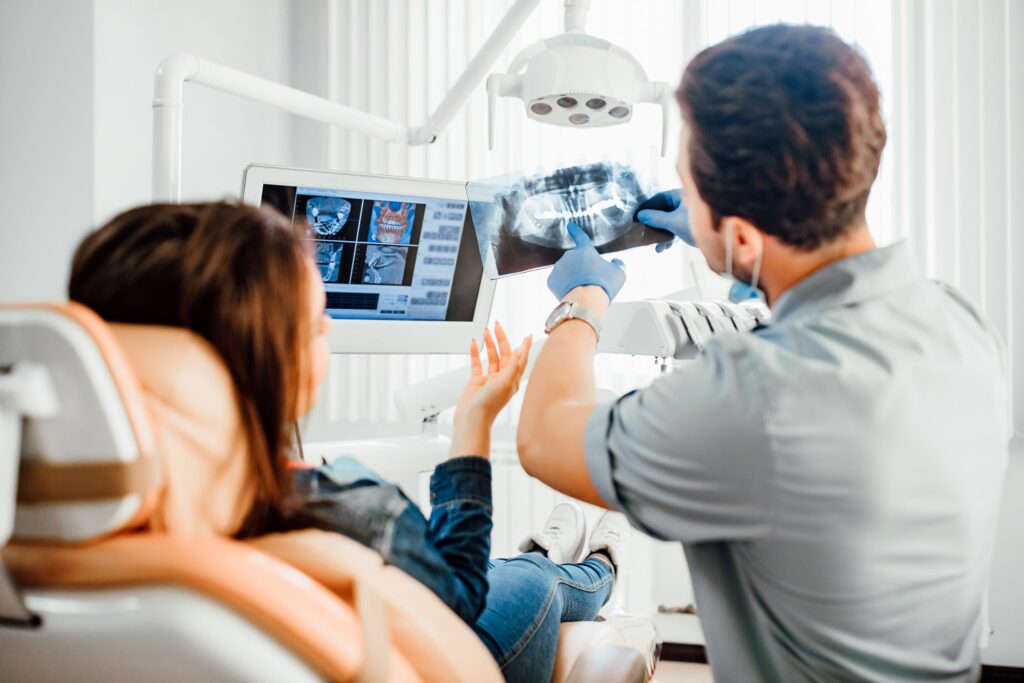
Today, many providers use more updated methods to create accurate models of your mouth, such as digital X-rays or impressions. This enhances the accuracy of the finished product, often resulting in a better fit and a longer-lasting solution for tooth loss.
Upgrade #2: Computer-Guided Surgery
Computer-guided surgery is another more recent technological advancement that has contributed to more comfortable and reliable replacement teeth. Your teeth, gums, and jawbone contain nerves that can be painfully triggered by a poorly placed dental implant. This can result in chronic aches that sometimes require an additional surgical procedure.
Fortunately, many dentists today utilize 3D CT scans and other specialized software to pre-plan implant placement using digital recreations of your mouth. This advanced equipment allows providers to determine the exact angle, depth, and location necessary for faster, less invasive, and more accurate surgical procedures. This can also help minimize tissue trauma and expedite recovery.
Upgrade #3: Biocompatible Materials
Not only are the methods for placing these restorations continuing to evolve, but so are the materials used to make them! For instance, titanium is the more traditional option for dental implant posts because it’s biocompatible, meaning that the human body won’t reject it.
Furthermore, this metal resists corrosion and is incredibly strong yet lightweight, which is ideal for oral use. It can withstand the pressure of daily biting and chewing, and is unlikely to result in potential complications.
As you can see, the field of dentistry continues to evolve with ongoing developments in technology and materials. If you’re seeking a reliable way to rebuild your smile after tooth loss, there’s no better time than now to consider getting dental implants!
Meet the Author
Dr. Jon Kirlough has decades of experience helping people improve their lives by enhancing their oral health. He earned his dental degree from The Ohio State University College of Dentistry and then completed an Advanced Education in General Dentistry Fellowship at the Naval Dental Center on Parris Island. Today, he offers a comprehensive menu of services under one roof, including dental implant placement and restoration for your convenience. You can request an appointment on the website or by calling (440) 234-2445.